Overview
The decommissioning of the Mühleberg nuclear power plant will result in the removal of part of Swiss energy production in Central Switzerland from the end of 2019. In the medium-term, this missing feed-in needs to be offset by higher production by Swiss power plants or energy imports from abroad. To enable the additional imports, the existing capacities of the extra-high-voltage lines and transformers between Bassecourt and Mühleberg need to be expanded. This is particularly important in the winter months, when Switzerland relies on additional energy imports.
In a normal supply situation, Greater Bern will receive an adequate supply of electricity even after the decommissioning of the Mühleberg nuclear power plant. In the event of short-term grid congestion, the Swissgrid grid control room can take various measures, such as switching operations or interventions in electricity generation (redispatch) or measures on the power market (NTC adjustments), to respond to the situation and ensure grid stability. Swissgrid needs the 380-kV connection between Bassecourt and Mühleberg to ensure the security of supply in the medium term.
Project
The Bassecourt – Mühleberg extra-high-voltage line is 45 kilometres long and was built in 1978. The Federal Inspectorate for Heavy Current Installations (ESTI) approved the line for an operating voltage of 380 kV back in 1978. However, it has been operated with a voltage of only 220 kV since that time. The voltage increase will take place in compliance with the limits specified in the Ordinance on Protection against Non-Ionising Radiation (NISV).
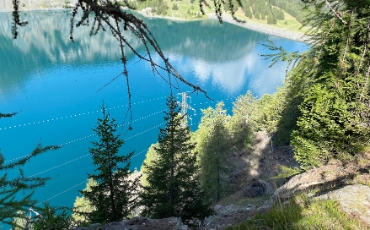
The line will be modernised along the existing pylons and will not change the landscape. Construction work is planned on 54 of a total of 142 pylons: individual pylon foundations will be reinforced, double anchor chains will be installed, or the cable winch tension will be increased. The future operation at 380 kilovolts will result in an increase in noise emissions that will be hardly noticeable.
The planned construction measures to increase the voltage of the Bassecourt – Mühleberg line can be technically implemented in a short period of time (approx. 6 months).
The construction costs for the increase in voltage and modernisation of the Bassecourt – Mühleberg extra-high-voltage line amount to approximately 11 million Swiss francs.
Schedule
On 22 August 2019 the Swiss Federal Office of Energy approved the voltage increase of the extra-high-voltage line between Bassecourt and Mühleberg from 220 to 380 kilovolts and dismissed the objections. These generally related to the load from magnetic fields and the noise or demanded that the line route be relocated or cabled. Various appellants have appealed to the Federal Administrative Court against the decision made by the Swiss Federal Office of Energy. The Federal Administrative Court confirmed the planning approval for increasing the voltage of the Bassecourt–Mühleberg line, rejecting all complaints, on 15 September 2020. This decision can be appealed against by filing an objection with the Federal Supreme Court (BGer). This will delay the voltage increase of the Bassecourt – Mühleberg line by at least two years.
Mühleberg substation
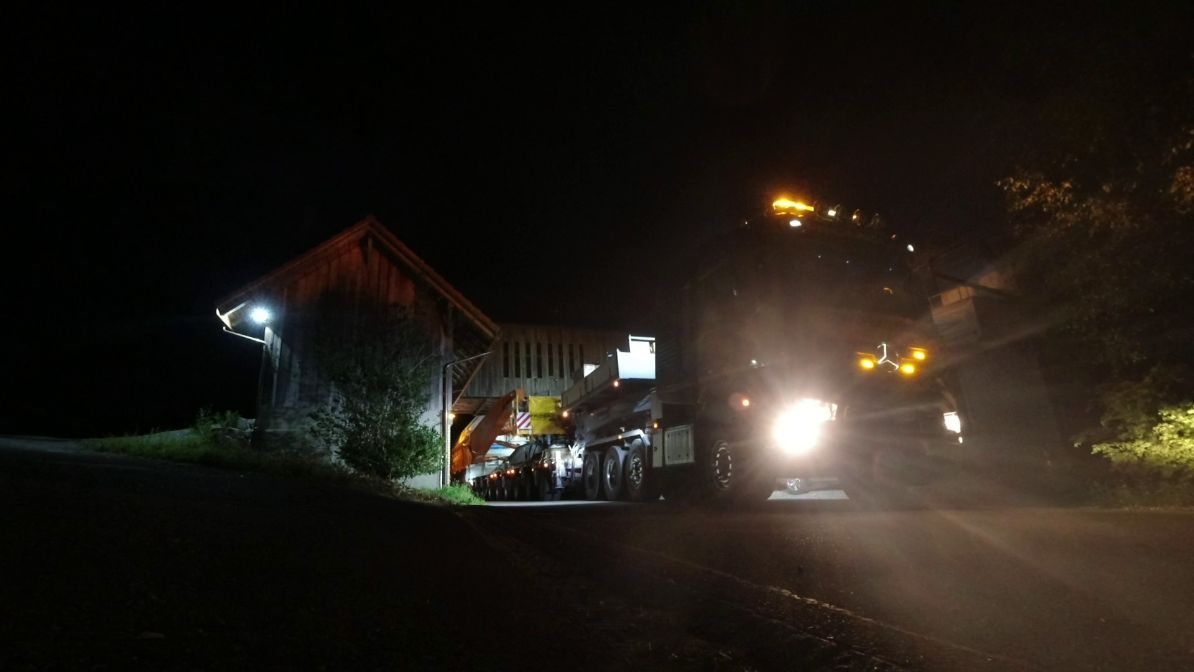
Swissgrid is installing a new transformer in the Mühleberg substation. Together with the voltage increase in the extra-high-voltage line, the transformer in Mühleberg ensures that the imported electricity can be converted to the 220 kV voltage level (supply level). Swissgrid had already replaced the outdoor switching station in Mühleberg with a gas-insulated switching substation at an earlier time.
The additional transformer capacities are an important element in
Swissgrid’s «Strategic Grid 2025». It plans for additional transformers
in Mühleberg, Laufenburg, Beznau, Chippis, Châtelard and Romanel. Around
90 percent of the exchange of energy with foreign countries is carried
out via the 380 kV grid. The transformer capacity has been limited to
date and is preventing the full utilisation of the electricity imports.