

Electric and magnetic fields
It is hard to imagine our daily life without the numerous electronic gadgets and tools. However, we are much less aware that electric and magnetic fields are formed everywhere electricity is present: including in the generation, transmission and distribution of electric energy.
Electric field
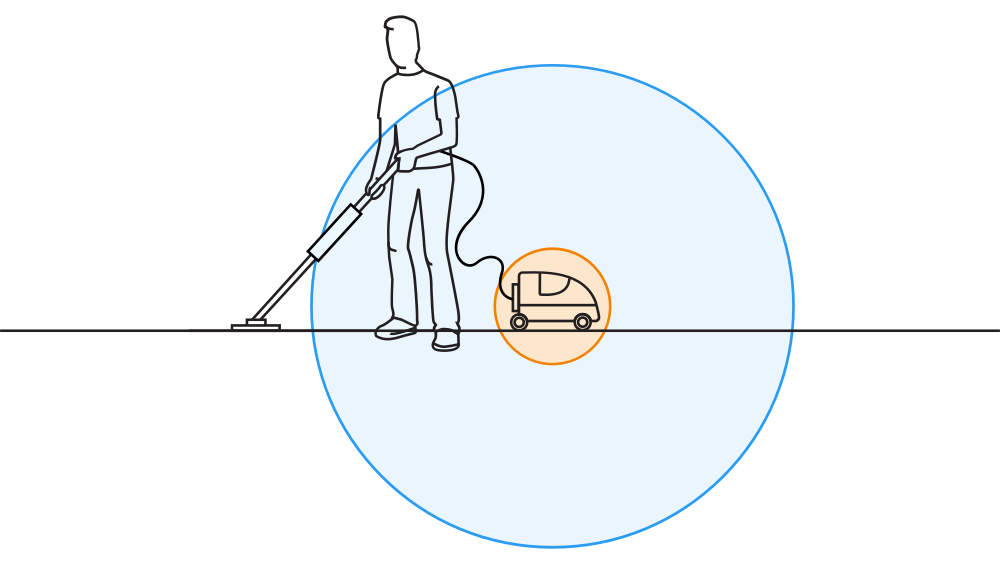
As soon as a device is connected to an electrical outlet, it contains a voltage. An electric field is created even if the device remains switched off and no current flows. The voltage determines the intensity of the electric field and is measured in volt per metre (V/m). As the distance from the source increases, the strength of the field decreases.
Magnetic field
Once current flows, a magnetic field is formed in addition to an electric field. The electricity volume transported through the line determines the strength of the magnetic field and is measured in microtesla (μT). As the distance to the line increases, the strength of the field decreases.
Electromagnetic spectrum – non-ionising radiation
One of the strictest limit value directives in the world
The International Commission on Non-Ionizing Radiation Protection (ICNIRP) specified the international limits in 1998. In the Swiss Ordinance on Protection from Non-Ionising Radiation, Switzerland specified limits for electric and magnetic fields which go much further and are among the strictest in the world.
International comparison of limits for electrical and magnetic fields
| Electrical fields | Magnetic fields | ||
| Immission limit | System limit | ||
| ICNIRP* | 5 kV/m | 200 μT | - |
| Switzerland | 5 kV/m | 100 μT | 1 μT |
| Germany | 5 kV/m | 100 μT | - |
| Netherlands | 5 kV/m | 100 μT | ** |
| * International Commission on Protection against Non-Ionising Radiation ** The Netherlands use the annual average load and not the maximum load like Switzerland as the basis for calculations. They have a system limit of 0.4 μT. |
|||
Immission limit
Applies everywhere people may be present. The lines are to be dimensioned so that this limit is never exceeded.
System limit
Applies for places with sensitive use:
- Places where people are subjected to immissions over extended periods of time, such as in bedrooms and living rooms.
- Places where children are frequently present, such as in classrooms or on playgrounds.
- Areas of undeveloped land where these uses are permitted.
Magnetic fields exist around overhead lines and underground cabling
Strength of the magnetic field
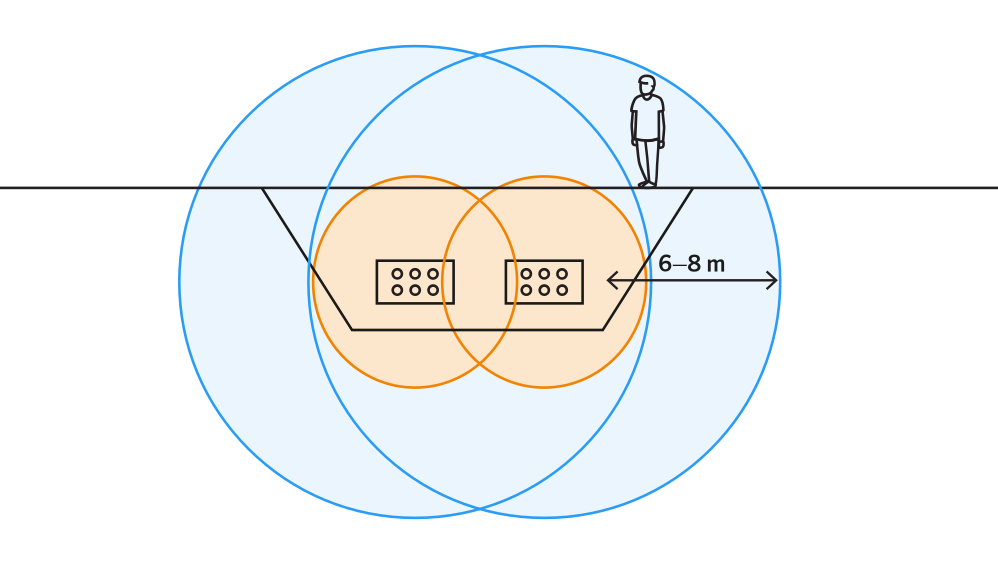
The magnetic field is much stronger right above underground cabling than it is below an overhead line. On the ground, where people normally are, the magnetic field for overhead lines is a few microtesla while it can reach up to 100 microtesla for underground cabling.
Spatial expansion of the magnetic field
For overhead lines, the 1 microtesla limit is observed at a distance of approx. 60-80 metres from the conductors. For underground cabling, this distance is approx. 6-8 metres.
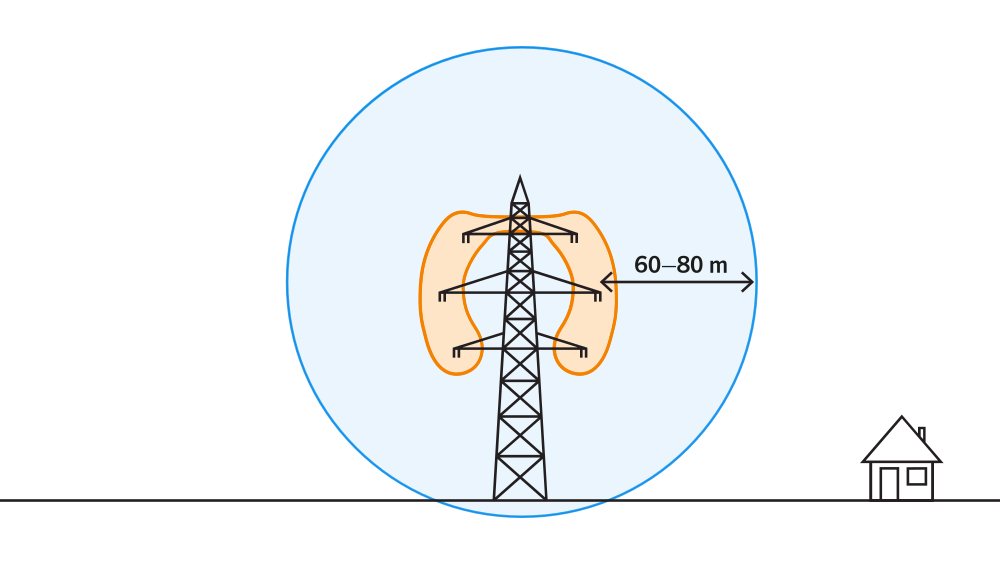
Measurements and calculations (von data-int)
Cooperation with research
Swissgrid has entered into a partnership with the Swiss Research Foundation for Electricity and Mobile Communication (FSM), a non-profit research foundation at the ETH Zurich. The FSM promotes research on technological, biological, health-related and social issues in the context of electromagnetic fields of radio and electricity technologies. The foundation also provides consulting for the authorities, companies and organisations, hosts conferences and imparts expert knowledge to the general public.
Noise
Unfavourable weather conditions in particular, such as rain, hoar frost or wet snow, can cause local electrical discharge in power lines. In electrical engineering, this process is known as corona discharge. The phenomenon can produce noises described as crackling or humming.
In Switzerland we have an emissions limit of 55 decibels in residential areas (45 decibels at night), which must be adhered to by law. The noise pollution from a busy street is over 80 decibels. Where necessary, Swissgrid employs all technical means to limit the corona effect. Corona noises are not present in underground lines.
The following movies show the sound intensity of high voltage power lines compared to more common ambient noise:

Environment
Environmental impact assessment
As part of the approval process (UVP), the environmental impact assessment examines whether a project complies with the legal regulations for environmental protection. The environmental impact assessment report (UVB) is the basis for the examination. As the client, Swissgrid is responsible for the preparation and submittal of the UVB documents. However, an independent, professionally qualified office is normally commissioned to prepare the UVB. Various issues are dealt with in the report, including noise, non-ionising radiation, water, soil, contamination, forest, biotope and vegetation, fauna and habitat, landscape and visual character, cultural monuments and archaeological sites.
Environmental supervision
Environmental supervision (UBB) looks after and monitors environmental concerns during construction and supports the client in the legally compliant and environmentally compatible execution of the construction project. In the process, it ensures compliance with environmental laws, regulations, guidelines, instructions and requirements of the planning approval decision. They advise and support the participants, observe and evaluate environmental problems on the construction site and ensure legally compliant execution of the project.